
 609-895-0596
Proven Gutter Cleaning Tips That Save Money: Princeton NJ Homeowners
If you live in central New Jersey or eastern Pennsylvania, you know how quickly leaves, pine needles, and storm debris can pile up in your gutters. Homeowners in towns like Princeton, Flemington, and across Mercer County and Bucks County often ask the same question: how often do gutters really need to be cleaned?
The short answer is that most homes in this region need gutter cleaning at least twice a year, and many wooded properties need it more frequently. The exact schedule depends on how wooded your lot is, the types of trees around your home, your roof and gutter design, and how much wind and storm activity you get each season.
How Often Should you Clean Your Gutters?
For a typical home without heavy tree coverage, a good baseline is two gutter cleanings per year: Late spring: After pollen, blossoms, seed pods, and early leaf debris. Late fall: After the bulk of the autumn leaf drop and before winter snow and ice.
This twice‑a‑year schedule works well for many neighborhoods and helps prevent clogs, overflows, and ice dams in winter. However, properties with more trees or more complex rooflines often need a more customized schedule.
Special Considerations for Wooded Properties
Many homes in the Princeton-Flemington area and surrounding communities are surrounded by mature trees. These beautiful, established neighborhoods come with extra gutter maintenance needs.
You may need gutter cleaning three to four times per year if: Your home is heavily wooded or surrounded by tall oaks, maples, or other broadleaf trees. Pine trees or evergreens are close to the roofline and drop needles year‑round. Your roof has multiple valleys, dormers, or complex angles that trap leaves and debris. You’ve noticed frequent overflowing during storms, even after recent cleanings.
In these situations, a quarterly schedule (spring, mid‑summer, fall, and early winter) can help keep gutters flowing and protect your roof, fascia, and foundation from water damage.
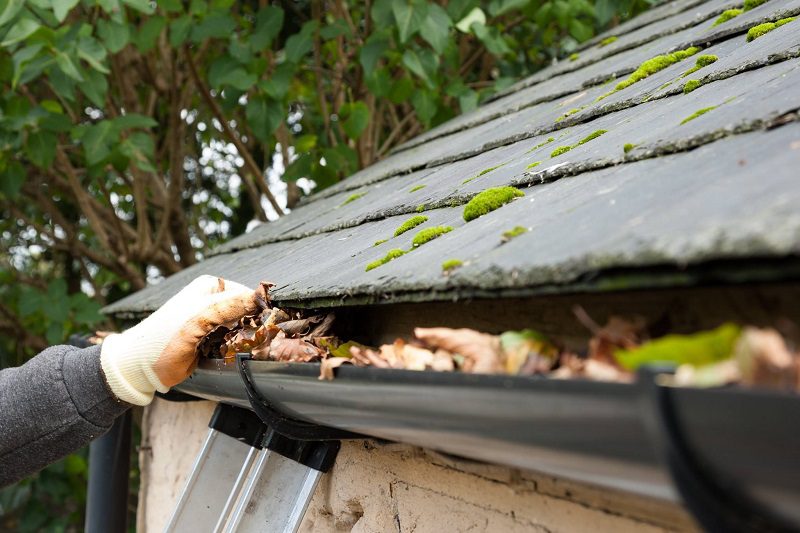
How Tree Type and Debris Affect Cleaning Frequency
Oak and Maple Trees
Oak and maple trees: Drop large leaves, acorns, and seed pods that can quickly block downspouts in the fall.
Pine and Evergreen Trees
Pine and evergreen trees: Shed fine needles, cones, and small twigs throughout the entire year, which can slip through many gutter screens and build up as dense mats.
Flowering Trees
Flowering trees: Produce blossoms, seed pods, and pollen strings in spring that can clog gutters before summer storms.
Nearby fields or open spaces
Wind can carry dust, dirt, and lightweight debris onto your roof even if your yard has few trees.
If you notice your gutters filling up soon after a cleaning, it’s a sign that your property’s tree mix may require more frequent service than the “average” home.
Signs Your Gutters Need Cleaning Now
Water spilling over the sides of the gutters during rain. Visible plants, moss, or piles of leaves sticking up out of the gutter. Staining or streaks on your siding or fascia boards under the gutters. Pools of water near your foundation or dampness in your basement after storms. Sagging gutters or sections pulling away from the house. Increased pests, mosquitoes, or birds nesting in or around the gutters.
If you’re noticing any of these issues at your home it’s best to get your gutters inspected and cleared before the next big storm.
Do Gutter Guards Eliminate the Need for Cleaning?
Gutter Guards Reduce But Don’t Eliminate Cleaning
Many homeowners install gutter guards to cut down on maintenance. Gutter guards and screens can significantly reduce how often your gutters need to be cleaned, but they don’t eliminate cleaning entirely.
Even with gutter guards, you should still: Schedule at least one inspection and cleaning per year to remove fine debris, shingle grit, and sludge. Check after major storms or heavy leaf fall, especially if you live in a wooded area. Make sure downspouts are flushed and clear, since they can still clog below the guard.
Homes in heavily wooded areas may still need more than one visit per year even with guards installed.
Why Regular Cleaning Matters for Homes
Local Climate Water Damage Risks
Our local climate brings heavy rain, strong storms, fall leaf drops, and winter freeze–thaw cycles. When gutters clog, water has nowhere to go. It spills over the edges, runs down your siding, and collects around your foundation. Over time, that can lead to: Rotting fascia and soffits. Roof leaks and interior water damage. Mold and mildew problems. Foundation cracks and basement moisture. Landscape erosion and washed‑out beds.
Routine gutter cleaning is a simple, affordable way to prevent expensive repairs and protect your home’s value, especially in tree‑dense towns.
Recommended Cleaning Schedule for Your Area
Light Tree Cover Schedule
Here’s a simple guideline you can use as a starting point: Light tree cover: Twice a year (late spring and late fall). Moderate tree cover or a mix of deciduous and evergreen trees: Three times a year (spring, early fall, late fall). Heavily wooded lots: Three to four times a year or on a custom schedule based on how quickly your gutters fill.
From there, adjust based on what you see. If gutters are overflowing between scheduled visits, increase the frequency. If they stay relatively clear, you may be able to reduce it slightly.
Need Help Setting the Right Schedule?
If you’re not sure how often your property needs its gutter cleaned, a professional inspection can quickly answer that. An experienced gutter company can look at your roofline, tree coverage, and debris patterns, then recommend a customized maintenance plan that keeps your home protected year‑round.
By aligning your gutter cleaning schedule with your local climate, neighborhood, and tree coverage, you protect your roof and foundation, improve curb appeal, and avoid costly water damage—all while giving yourself peace of mind every time it rains. Contact us today to learn what is best for your home.